Let's start with the hard truth
Pain during sex isn't something you're supposed to just push through. But most people do, for years, because the alternative feels worse.too embarrassing to mention, too loaded with shame to explore, too uncertain to know whether it's even fixable.
It is fixable. The fix, though, often requires permission to stop doing what isn't working and start somewhere else entirely.
What pain during sex actually signals
Dyspareunia is the clinical term. What it means in real life is: your nervous system is protecting you. This isn't a character flaw or a sign your body is broken. It's a warning signal, and sometimes that signal has been misfiring for so long that your brain learned to anticipate pain even when the original trigger is gone.
Pain can come from medical reasons: endometriosis, vulvodynia, pelvic floor tension, scarring after childbirth, hormonal changes, infections. Or it can come from psychological reasons: past trauma, anxiety about penetration, relationship stress, performance pressure. Most often it's both tangled together, which is why treatment usually requires addressing the physical and emotional sides simultaneously.
Here's the part that matters for pleasure: pain creates avoidance. Avoidance creates disconnection from your own body. Disconnection makes arousal harder. And that cycle reinforces itself.
Breaking it requires a deliberate pause on the thing that hurts and a slow, controlled return to sensation in a space where you feel safe.
Why lemon clitoral vibrators change the equation
Clitoral pleasure is a different pathway than penetrative pleasure. Your clitoris has 8,000 nerve endings concentrated in a space smaller than a pea. That density means sensation is direct, intense, and completely independent of what's happening inside your body.
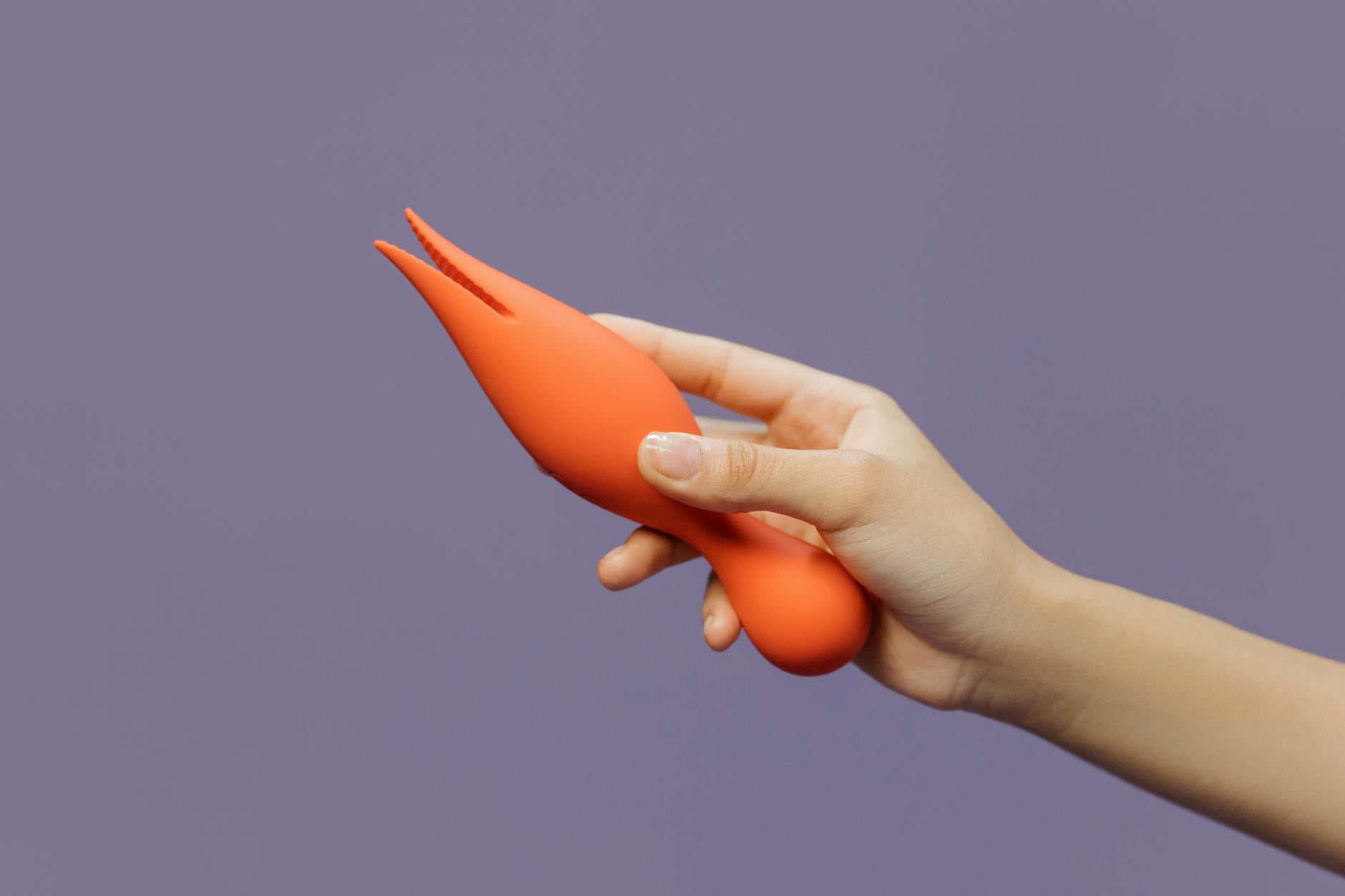
Lemon vibrators and other suction-style clitoral toys work through gentle air-pulse technology rather than friction. This matters because:
They don't require deep pressure. If your pelvic floor is tense or your tissues are sensitive, a traditional vibrator's vibration can aggravate things. Suction toys work on the surface, with precise, focused stimulation that doesn't demand your body to relax into penetration.
They activate pleasure pathways without triggering pain memories. Your nervous system learns that this specific type of touch equals safety and reward. Over time, that rewiring can help your body distinguish between "this hurts" and "this feels good," even in the same physical space.
They're completely under your control. You decide the intensity, the duration, the rhythm. That autonomy is neurologically grounding for people whose pain history involved feeling out of control.
The rebuilding phase: what actually works
You're not starting from zero. Your body remembers pleasure. Right now it just remembers pain louder.
Here's the framework I recommend to clients working through pain:
Phase One: Solo exploration (1-2 weeks minimum). Use your lemon vibrator alone, with no pressure to orgasm. The goal is sensation mapping. Which settings feel good? Which feel like too much? Does the intensity make you tense up? Does a lighter touch let you relax? You're teaching your nervous system that this kind of touch is safe.
Start at the lowest setting. Spend time on the outer vulva first. Your clitoris is sensitive, so ease into direct contact. Many people find starting with the toy slightly off to one side, letting the sensation build gradually, reduces the reflex to tense up.
Phase Two: Pleasure building (2-4 weeks). Once low-intensity solo sessions feel genuinely good, increase intensity slowly. Notice where your breathing is. Pain often lives with shallow breathing. Pleasure lives with deeper, rhythmic breathing. If you catch yourself holding your breath, you've probably hit an intensity that's triggering your protective reflex.
Phase Three: Partner presence (when ready). Your partner doesn't need to do anything except be present without expectation. Many people find this the hardest part because old patterns want to reengage immediately. Resist that.
Start with your partner in the room while you use your lemon vibrator. You're not performing for them. You're practicing pleasure in their presence, which is neurologically different from being alone. That practice teaches your nervous system that their body in the room doesn't automatically mean penetration pressure is coming.
Phase Four: Gradual reintegration. Only when solo and partner-present sessions feel genuinely comfortable should you attempt any kind of penetration. And when you do, keep the lemon vibrator in the scene. Use it first to build full arousal, then maintain it during any penetration.
Many people find they need ongoing clitoral stimulation during penetration, and that's not a problem to solve. It's your body telling you what it needs.
The mental side matters as much as the physical side
Pain creates narrative. "My body doesn't work." "I'm broken." "This will never get better." "My partner will leave if this doesn't fix." Those stories are understandable, but they're usually not true, and they slow healing.
The most useful reframe I offer is simple: your body isn't broken. It's responding logically to a threat. Your job right now isn't to force pleasure. It's to build evidence that this specific type of touch equals safety.
Every session with your lemon vibrator where you feel genuinely good is evidence. Every moment your nervous system relaxes instead of tensing is evidence. Those micro-shifts matter more than any single orgasm.
If you have a partner, a conversation about this approach is important. Many partners are terrified that pain during sex means they're causing harm. Naming what you're actually doing (rebuilding, relearning, healing) takes the weight off that.
When to bring in professional help
If pain is sharp, persistent, or worsening, see a gynecologist or pelvic floor physical therapist. Some causes of dyspareunia need medical intervention first (antibiotics for infection, pelvic floor therapy for tension, topical treatments for tissue changes).
If the anxiety around sex feels separate from physical pain (you're fine alone, but panic appears as soon as a partner is involved), talking to a therapist trained in sex therapy or somatic work can help. They can work with you on the nervous system patterning that's keeping you stuck.
Neither of these contradicts what you're doing with your lemon vibrator. They complement it.
The part nobody tells you
Many people find that once pain resolves, their pleasure actually becomes more intense than it was before. Neuroscience suggests this is because your nervous system has literally been reprogrammed through this process. You've taught it precision. You've taught it safety. You've taught it that your body's signals matter.
That's worth the patience this takes.
FAQ: Your questions, answered
Can I use a lemon vibrator if I'm still experiencing pain?
Yes, but intentionally. The goal isn't to push through discomfort. It's to find sensations that feel genuinely good. Start at the lowest intensity, avoid direct clitoral pressure initially, and stop immediately if you feel sharp pain. Gentle ache or sensitivity as you're learning is normal. Shooting pain is a signal to pause and try again another time.
Will using a vibrator make penetrative sex painful again?
No. You're essentially creating a new pathway in your nervous system. Using a clitoral toy doesn't erase your ability to enjoy penetration. Many people need both simultaneously, and that's completely normal and healthy.
How long does this usually take?
It depends on the cause and your history, but most people see meaningful shifts in 4-8 weeks if they're consistent with solo sessions. Pain that's connected to deeper trauma might take longer. Patience matters more than speed here.
What if my partner doesn't understand why we can't have "normal" sex?
That's a conversation worth having, and it might help to frame it this way: you're not choosing to avoid sex. You're choosing to rebuild it in a way that works for both your bodies. That's actually the most thoughtful approach. Many partners feel relieved to finally have a plan instead of just guessing.
Is it normal to feel guilty about needing this much time?
Completely normal and completely worth questioning. Guilt often comes from cultural messaging that your pleasure should be easy and automatic. It's usually not, especially after pain has entered the picture. You deserve the time this takes.
Can I combine a lemon vibrator with penetration right away?
You can try, but most people find solo and partner-present phases build confidence first. Once your nervous system has strong evidence that this toy equals pleasure and safety, adding penetration becomes less triggering. Patience here pays off.
You're not starting over. You're starting differently.
Pain creates distance. Sometimes it creates distance from your partner, sometimes from yourself, usually both. Your lemon vibrator is a tool for closing that distance again, at your pace, in a way your body can trust.
This takes time. It's worth it. If you'd like to talk through your specific situation in more depth, we're here to help.