
The thing nobody tells you about pleasure and repetition
You find something that works. You use it. A lot. Then one day you notice it doesn't feel quite the same anymore. The vibration that used to send electricity through your whole body now feels distant, muffled, like you're experiencing it through a layer of padding. You're not imagining this. This is real, and it has a name: desensitization.
Here's the good news: it's not permanent. And it doesn't mean your clitoris is broken or that you've somehow "used up" your capacity for pleasure. What's actually happening is your nerve endings have adapted to the stimulus through something called habituation. Your nervous system is basically saying "okay, we've seen this pattern before" and turning down the volume. It's a protective mechanism. The problem is it also kills the sensation you're chasing.
I work with people all the time who panic when this happens. The assumption is they've damaged themselves or that they need to escalate to something more intense. Neither is true. What you actually need is a reset strategy, and then a smarter way forward.
Why this happens with vibrators (and it's not your fault)
Vibration is a specific stimulus. Your nervous system learns patterns incredibly fast. When you use the same toy at the same intensity, the same pattern, the same duration, several times a week or daily, your clitoris literally stops responding with the same intensity. This is neural adaptation, and it's the same mechanism that happens when you wear a watch for a few hours and then stop noticing it's there.
The clitoris has thousands of nerve endings concentrated in a tiny area. It's extraordinarily sensitive. But that sensitivity is actually a system that's designed to notice change, not consistency. Constant stimulation becomes background noise.
This doesn't mean you've damaged nerve function. It means you've trained your nervous system to filter out a repeated signal. The solution isn't to go harder or faster. It's to change the signal entirely.
The reset phase: giving sensation a break
Before you jump back to toys, try this. Take a complete break from vibrator use for at least 5-7 days, ideally two weeks. I know. It sounds counterintuitive when the goal is to feel pleasure again. But this pause is essential because it resets the baseline.
During this break, you're not avoiding all touch. You're just avoiding mechanized stimulation. You can explore manual touch. You can masturbate with your hands. You can notice what light touch, pressure changes, rhythm shifts actually feel like when they're not delivered by the same predictable pattern.
Here's what happens during that break: your nerve endings stop filtering out sensation. The background noise clears. You start to feel more nuanced touch again. By day 5 or 6, you'll often notice that your hand touch suddenly feels more intense than it did before.
This is when you know the reset is working.
Starting over with lemon vibrators (smarter pattern)
When you reintroduce a toy, don't go back to what worked before. The whole point is to break the pattern your nervous system has learned to ignore.
Start with the lowest setting. On the Lemon Vibe clitoral vibrator, this means pattern 1 or 2, not the intensity you were using before. Spend 5-10 minutes just getting reacquainted with what subtle vibration feels like. You might actually feel things you've never noticed before because you're not in the intensity escalation trap.
Then change the pattern. Don't stay on one rhythm. Alternate between two or three different patterns. This variation is key. Every time you switch, your nervous system has to pay attention again because the signal changed. That attention is what creates sensation.
Use it for shorter sessions. Instead of 30 minutes, try 10-15. Shorter sessions actually feel more intense because your nervous system hasn't had time to adapt. Plus, you're more likely to enjoy it and want to come back.
Space out your sessions. If you were using a vibrator daily, move to 2-3 times a week. This doesn't mean less pleasure overall. It means more intense pleasure each time because your nervous system stays in the "wait, what was that?" mode instead of the "okay I know this already" mode.
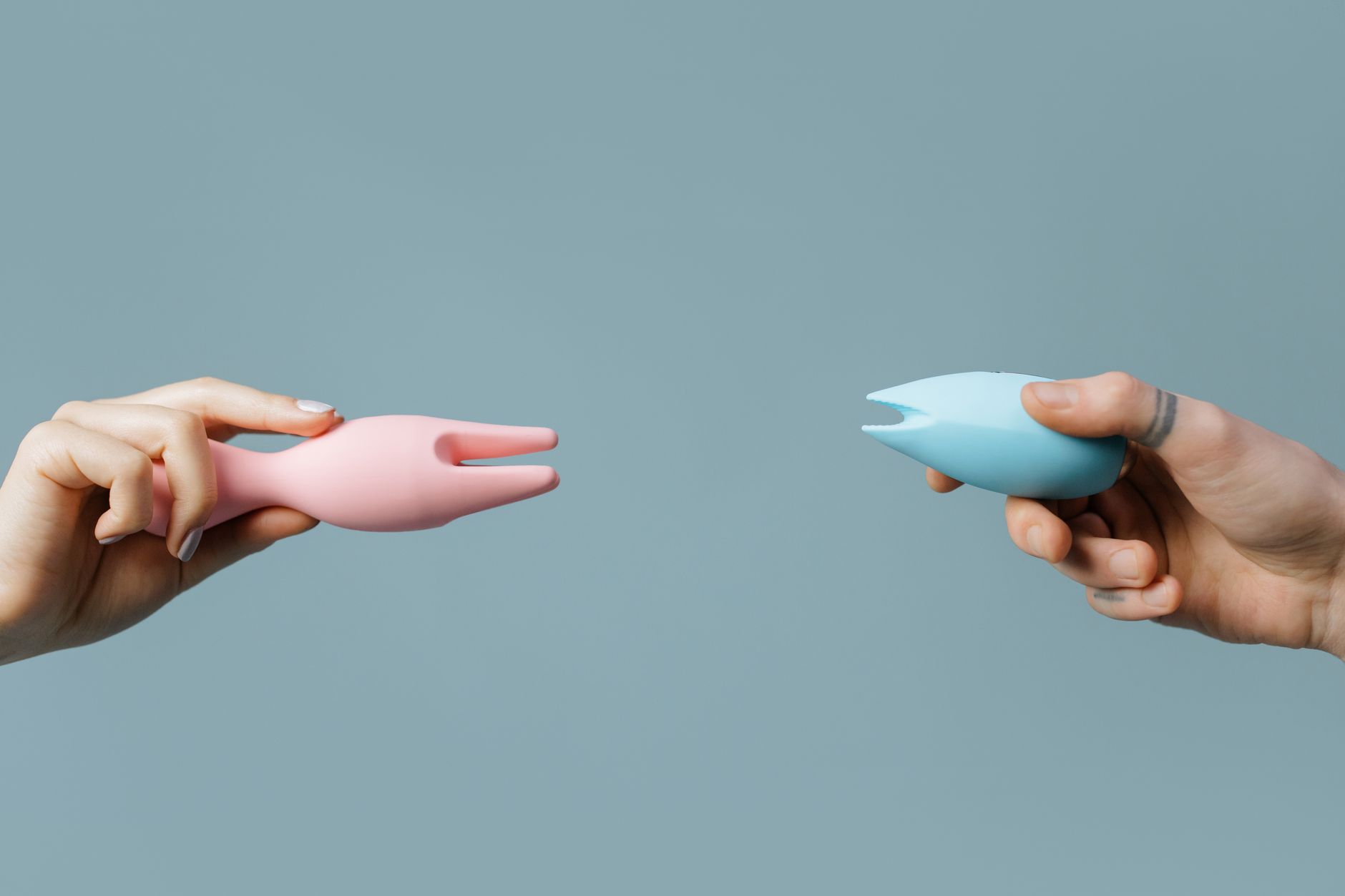
Photo by cottonbro studio on Pexels
The psychology part (because it matters just as much)
Lots of people approach pleasure like they approach a to-do list. Get the vibrator, find the right intensity, finish the job, move on. When sensitivity drops, the panic is often about "did I break something?" rather than "what actually feels good right now?"
The reset period is actually useful for a different reason too. It forces you to slow down. To pay attention. To notice what texture actually feels like, what pressure variation does, what happens when you change touch mid-session versus staying locked into one thing.
People who rebuild sensation almost universally report that their whole experience of pleasure changes during this process. Not just with vibrators, but with partnered touch too. The pause resets your entire nervous system, not just your clitoris.
If you have a partner, this is a good time to explore touch together that isn't about achieving a specific outcome. That's how sensitivity actually rebuilds. Not through escalation, but through attention.
Using variety as your strategy going forward
Once you've reset and restarted, the goal is to avoid getting stuck in the same pattern again. This doesn't mean constantly buying new toys. It means using the tools you have differently.
If you have a Lemon Vibe clitoral vibrator, rotate between different patterns. Don't pick one that "works" and use it every time. Your nervous system will adapt to that too. Alternate between patterns every few sessions. Yes, this might mean it takes a few minutes longer to reach orgasm sometimes. That's actually the whole point. The journey is where the sensation lives, not the destination.
Change the pressure. Light touch, more pressure, less pressure, angle shifts. These micro-variations keep your nervous system engaged.
Change the duration. Sometimes 5 minutes, sometimes 20. Change the timing in your day. Morning sometimes, evening others. Change whether you're aroused first or using the vibrator to build arousal.
You can also alternate between toys if you have access to multiple textures or vibration patterns. But honestly, one well-used toy with variety in pattern, pressure, and approach beats five toys used predictably every time.
When to think about something different
If you've taken a proper reset break and reintroduced toys with varied patterns and you're still not feeling much, there might be something else going on. Sometimes reduced sensitivity is actually about stress, relationship dynamics, or medical factors like medication side effects. This is worth exploring separately.
If sensitivity is tied to numbness or pain, check in with a healthcare provider. But if it's purely about adaptation to vibration, the reset and variety strategy works almost universally.
One more thing: if you're someone who's been using very high intensity for a long time, know that rebuilding might mean accepting that your "normal" is going to be lower intensity going forward. That's not a loss. It's actually a gain, because you get to experience pleasure at intensity levels that feel sustainable long-term.
People also ask
Can you permanently desensitize your clitoris from vibrator use?
No. Desensitization from vibrators is about nervous system adaptation, not tissue damage. Your clitoris doesn't lose nerve endings. Once you take a break and reset, sensitivity returns. Most people notice significant changes within 2-3 weeks of stopping vibrator use and reintroducing touch.
How long does it take to rebuild sensitivity after a vibrator reset?
You'll notice changes within a few days of taking a break. Within two weeks, most people report significant shifts in sensation. Full sensitivity usually returns within 3-4 weeks. It varies based on how long and intensely you were using toys, but patience during this period pays off dramatically.
Is it okay to use clitoral vibrators every day?
Technically yes, but it's not ideal if you want to maintain sensation. Daily use accelerates adaptation. 2-4 times per week, with varied patterns and pressure, gives you more consistent pleasure than daily use does. Think of it like a workout: sometimes more frequent is better, sometimes strategic spacing is better.
Why do lemon vibrators feel different from other toys for sensitivity issues?
Lemon Vibe clitoral vibrators use air-suction technology, which creates a different kind of stimulation than traditional vibration alone. This different stimulus pattern often feels fresh to a nervous system that's adapted to pure vibration. Many people report that switching to a different type of stimulation altogether (not just a different vibrator) is actually more helpful than switching between similar toys.
Can sensitivity loss happen with other types of vibrators too?
Yes. Any repeated, predictable stimulus can cause adaptation. The antidote is the same: breaks, pattern variation, and alternating between different types of stimulation. The goal is to keep your nervous system paying attention rather than filtering things out.
What's the difference between desensitization and actual nerve damage?
Desensitization is reversible and about neural adaptation. Actual nerve damage would involve pain, numbness that persists even during manual touch, or loss of sensation that doesn't return after weeks of rest. If you're only experiencing reduced sensation to vibration (not other touch), it's almost certainly adaptation, not damage. True nerve damage from vibrator use is extremely rare and usually involves something going very wrong (like injury or extreme pressure over extended time).
The bottom line
Reduced sensitivity from frequent vibrator use is not a sign that you've done something wrong or that your body is broken. It's a sign that your nervous system is doing exactly what it's designed to do: adapt to repeated stimuli. The fix is straightforward: reset with a break, reintroduce with variation, and maintain sensation through strategic spacing and pattern changes.
Your pleasure isn't lost. It's just temporarily offline. And the good news is the journey to get it back often teaches you more about what actually feels good than you knew before.
If you want to talk through your specific situation or explore other approaches, reach out anytime.